Water intrusion isn’t just a maintenance headache—it’s an expense multiplier. For multi-tenant and mixed-use assets, the way you define scope and select methods determines not only total cost, but disruption risk, compliance posture, and stakeholder confidence.
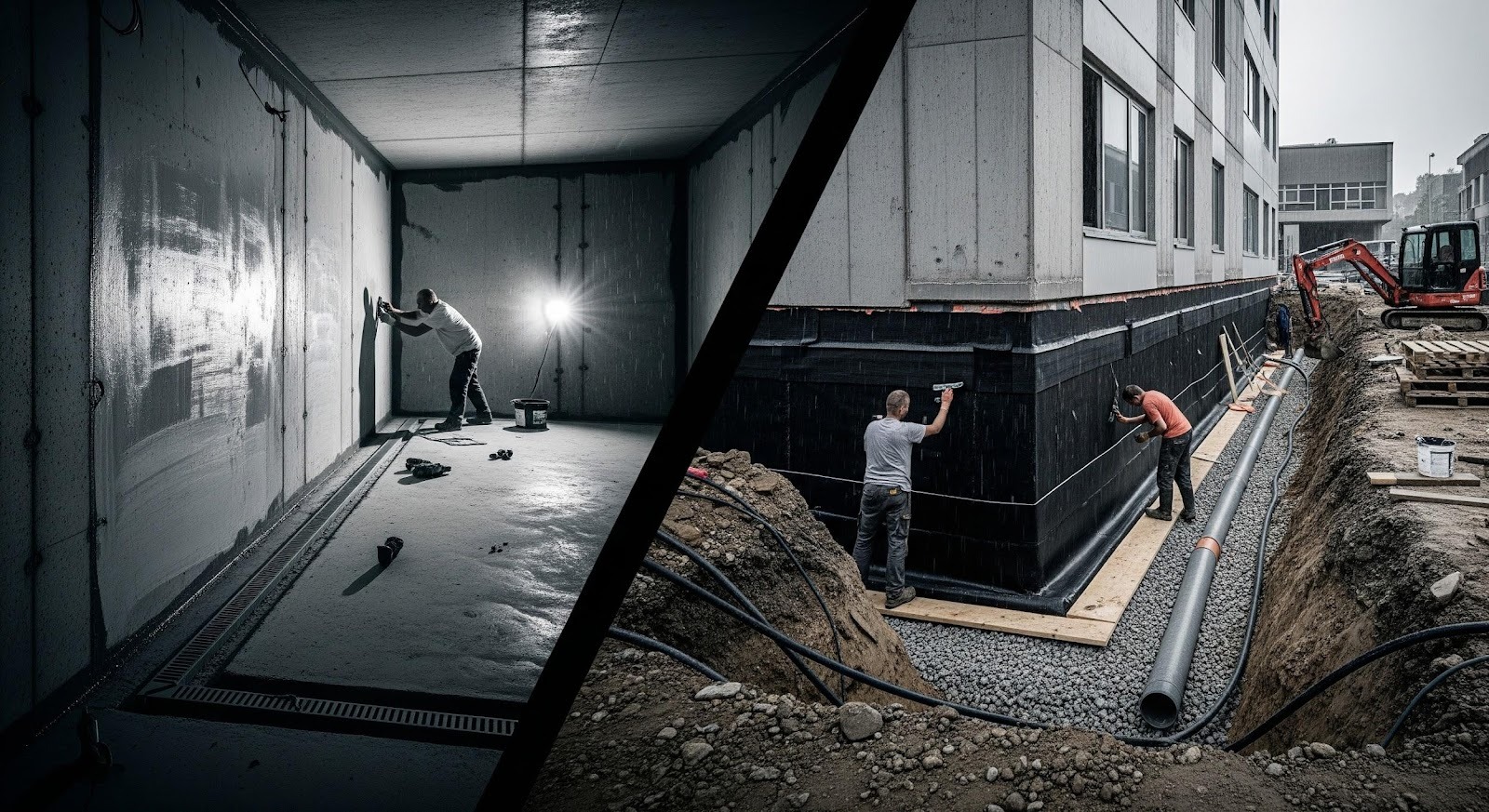
Many budget swings trace back to unclear scope. Interior approaches (managing water that’s entered) can be less disruptive; exterior approaches (keeping water out at the envelope) are typically more preventative but may require excavation. Building condition, depth, access, and linear footage drive cost, so your estimate model should reflect those variables—not generic price bands. Public guidance differentiates preventative exterior work and corrective interior strategies, with selection driven by site conditions and risk appetite.
In Toronto, permits are generally required for construction, demolition, additions or material alterations. Straightforward repairs may not trigger a permit, but any structural change, major excavation, or plumbing tie-ins can. To satisfy a building file review or insurer request, retain a brief memo citing the City’s guidance and the specific work items that do—or do not—require a permit. Start with the City’s portal and homeowner guide to align expectations before work begins.
Moisture that persists will eventually escalate into mold and IAQ complaints. Canadian federal guidance underscores that mould growth follows moisture; remediation strategies should prioritize stopping the moisture at source and ensuring drainage away from foundations. For due diligence, align remediation vendors to recognized standards (e.g., IICRC S500 for water damage restoration) and confirm relevant certifications when mold remediation intersects with the scope.
Exterior waterproofing may demand trenching, access closures, and staging that impacts tenants; interior strategies can often be staged off-hours with less site disturbance. Federal energy-efficiency guidance flags that excavation and drainage improvements extend timelines—factor this into leasing communications, delivery schedules, and after-hours noise provisions. A simple phasing plan (zones, hours, and communications) reduces coordination overhead and helps keep tenants operating.
A method-agnostic RFP framed around performance criteria helps control rework risk. Define measurable outcomes (e.g., dry-out targets, drainage performance, warranty terms) and allow vendors to propose interior, exterior, or hybrid solutions that meet those outcomes. Publicly available building-science and code resources distinguish damp-proofing from waterproofing; ensure the specification reflects the correct requirement for your conditions and hydrostatic pressure exposure.
For market context in waterproofing toronto, PMs often review vendor pages to compare approaches, typical sequences, and warranty language.
Set your budget guardrails early. Anchor every decision—permit posture, method, phasing, and warranties—to performance criteria. The outcome is a drier building, fewer disruptions, and a spend profile your finance team can live with.