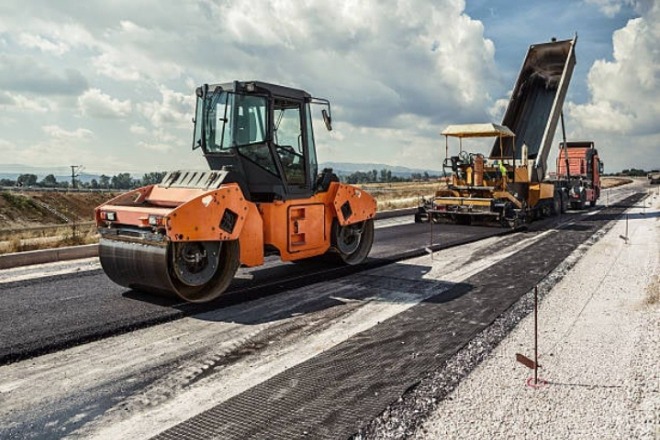
Flexible pavement systems form the backbone of contemporary road infrastructure, carrying the overwhelming majority of global traffic. Their widespread adoption is not coincidental; rather, it reflects decades of engineering research, economic analysis, and field performance data that demonstrate the long-term advantages of layered asphalt structures. Unlike rigid concrete pavements, which rely on slab-like stiffness to distribute loads, flexible road pavements use a multi-layer design that absorbs, transfers, and dissipates stresses progressively downward to the subgrade. This structural philosophy is central to their resilience, maintainability, and cost-effectiveness.
The Multi-Layer Design: How Flexible Pavements Carry Heavy Load
A flexible pavement structure typically consists of four major layers: the surface course, the base course, the subbase, and the prepared subgrade. Each plays a distinct role:
The hallmark of flexible pavement is its load distribution mechanism. Rather than resisting deformation through rigidity and plate action, flexible pavements channel loads through controlled elastic deformation. This allows them to adapt to variable soil conditions, subgrade moisture fluctuations, and thermal expansion—conditions that rigid concrete slabs often struggle with unless extensively jointed or reinforced.
Adaptability to Subgrade Conditions
One of the most compelling engineering advantages of flexible pavement systems is their ability to accommodate subgrade variability. Road networks often traverse inconsistent soils—from clays and silts to gravels and organic layers. A rigid pavement placed over a weak or uneven subgrade can crack quickly due to its inability to flex with soil movement.
Flexible pavements, by contrast, offer:
This adaptability significantly reduces the likelihood of structural failure and premature deterioration.
Maintenance Efficiency: A Major Life Cycle Advantage
When evaluating pavement alternatives, long-term maintenance costs are just as important as initial construction budgets. Flexible pavement excels in this regard due to its modular, layer-based design.
1. Surface Renewal Without Structural Disturbance
Most flexible pavement rehabilitation needs—rutting, cracking, oxidation, and surface wear—can be addressed by milling the upper asphalt layers and replacing them with fresh hot-mix asphalt. This process:
Because the structural base and subbase remain largely intact, the most expensive components of the pavement rarely require replacement.
2. Strategic Use of Road Profiling
Modern road profiling services (also called asphalt milling) enable precise removal of worn layers, ensuring optimal bonding for new asphalt overlays. Profiling is also used to:
The precision and speed of this process make it unmatched by rigid pavement repair operations, which often require heavy demolition, extended curing periods, and high material costs.
Recycling and Sustainability: Closing the Loop
Flexible pavements have a built-in recycling advantage. Old asphalt is 100% reusable. When milled, reclaimed asphalt pavement (RAP) can be incorporated into new mixes, sometimes at rates of 30–50% without compromising performance when properly engineered.
Key sustainability benefits include:
This circular approach makes modern road pavement systems not just durable but environmentally responsible. Rigid pavements can also be recycled, but the process is less efficient and lacks the closed-loop simplicity of asphalt reclamation.
Perpetual Pavement: Extending Life Indefinitely
A growing trend in asphalt engineering is the perpetual pavement concept—designing the lower layers of a flexible pavement to last for 50 years or more without structural failure. Only the surface layers require periodic renewal.
Perpetual pavement design relies on:
This approach minimises lifecycle costs and eliminates the need for deep reconstruction, making flexible pavements ideal for high-volume highways and freight corridors.
Economic Benefits: Lower Total Cost of Ownership
When considering initial construction cost, lifecycle maintenance, traffic downtime, and whole-of-life environmental impacts, flexible pavements consistently outperform rigid systems.
Their advantages include:
These combined benefits are why contractors, engineers, and road authorities overwhelmingly favour flexible solutions for most applications.
Flexible pavements are not merely a cheaper alternative to concrete; they are a sophisticated engineering system designed for resilience, adaptability, and long-term value. Their layered structure, efficient maintenance potential, and superior recycling capabilities deliver a compelling life cycle advantage that continues to define global road-building practice.
With increasing emphasis on sustainability, network durability, and efficient asset management, the role of flexible pavement systems in modern road pavement construction will only continue to grow—supported by ongoing innovation in materials, design approaches, and road profiling services that ensure performance for decades to come.