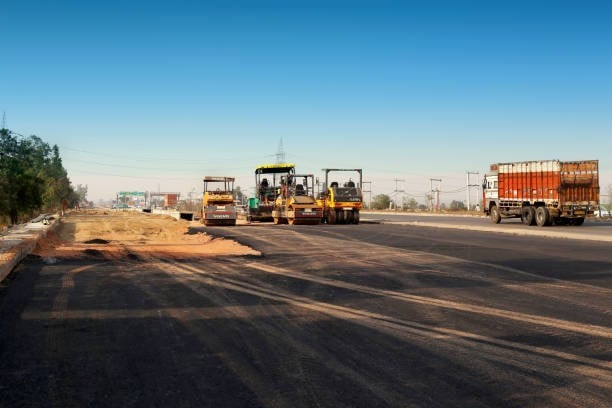
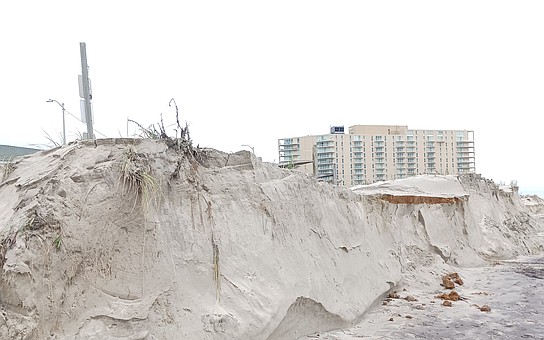
Admittedly, many people’s first thoughts about a roadway are the actual materials that line the roads that we drive on. This asphalt material is durable, black, smooth and is designed to be seen, touched and felt. All of these things are vital in delivering a satisfactory outcome, but when it comes to building a robust and resilient pavement, it all starts much lower down with the earthworks below.
What are Earthworks?
Earthworks are crucial because they form the base on which the entire road structure is built. In the construction of flexible road pavements, which involve layers of materials above a prepared subgrade, the quality of the earthworks is what determines the long-term performance of the pavement. Before any asphalt is laid, the land must be cut, filled, graded, and compacted to create a stable and level base.
The earthworks process begins with site clearance, followed by excavation and removal of any unsuitable material. The site is then backfilled, graded to the correct level, and compacted to increase its strength and load-bearing capacity. The aim of earthworks is to create a stable, well-drained subgrade or subbase upon which the pavement layers can be applied.
The subgrade is critical in pavement design because it is the foundation for the pavement layers that follow. The weight of the pavement and traffic loads is ultimately transferred to the subgrade, so its strength and uniformity are paramount in preventing pavement failure. If the subgrade is weak or uneven, these problems will be amplified through the pavement layers, resulting in premature rutting, cracking and other surface distress.
Preparation is everything, and to this end, earthworks contractors use sophisticated surveying, testing and compaction equipment to ensure the subgrade is as strong and level as possible.
The Role of Subgrade in Flexible Pavement Design
In a flexible road pavement system, each layer works together to spread traffic loads down to the subgrade. Unlike rigid pavements, which distribute loads primarily through the stiffness of concrete, flexible pavements rely on a well-compacted base and subgrade to carry the majority of stresses.
The typical structure of a flexible pavement includes:
If the subgrade is weak, the entire pavement structure is compromised. Load stresses will concentrate in localised areas, causing depressions, cracks, and permanent deformation. This is why engineers place such emphasis on achieving optimal compaction and uniformity during civil construction earthworks—it determines whether the pavement will last decades or deteriorate within years.
Excavation and Compaction: The Foundations of Strength
Consequences of Poor Earthworks
When subgrade preparation is overlooked or poorly executed, the consequences manifest quickly and severely. Common failures include:
Rectifying these problems after construction is both difficult and expensive, often requiring full-depth rehabilitation. Preventing them through proper earthworks is therefore not just best practice—it’s essential to cost-effective pavement management.
Modern Technologies in Earthworks
The evolution of digital and geospatial technologies has revolutionised how earthworks are planned and executed. GPS-guided graders and bulldozers can now achieve millimetre-level accuracy, while 3D laser scanning provides real-time verification of surface levels and slopes.
Moisture sensors embedded in compaction equipment allow operators to continuously monitor and adjust conditions on site, ensuring uniform density. These innovations help engineers achieve a higher degree of consistency and quality control than ever before, reducing human error and material waste.
Moreover, sustainability has become a driving factor in modern road construction. Where possible, engineers stabilise native soils using lime, cement, or bitumen rather than importing new materials. This approach reduces the carbon footprint of civil construction earthworks while maintaining structural performance.
The Hidden Work Behind Long-Lasting Roads
For motorists, a smooth asphalt surface represents quality. But for engineers, the unseen layers beneath tell the real story. Roads that perform well over decades owe their durability to the precision of the initial earthworks.
Well-compacted, stable subgrades protect against deformation and ensure that the pavement structure performs as designed. They also minimise maintenance costs, as properly prepared foundations can handle the cyclical loads of traffic and weather with minimal deterioration.
In this sense, earthworks are not just the first step—they are the defining step in the lifecycle of any flexible pavement.
Every road, from a rural connector to a major highway, depends on the quality of the ground beneath it. The science of earthworks—careful excavation, grading, and compaction—is what transforms raw terrain into a stable foundation capable of supporting decades of service.
For engineers and earthworks companies, precision at this stage is non-negotiable. The strength of a flexible road pavement begins and ends with the stability of its subgrade. When done right, it ensures resilience, safety, and sustainability for generations of road users to come.