
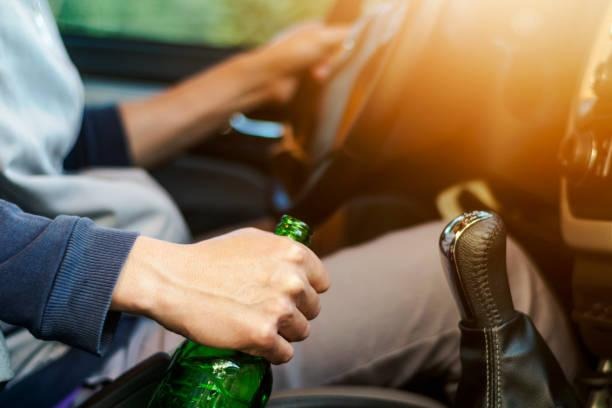
When one thinks he or she is alert or in control by having a single drink before driving, many people believe that the act is safe. Nevertheless, any alcohol consumption will impact your coordination, judgment, and reaction time in a manner that you might not feel immediately.
Determining if it’s safe to drive after drinking isn’t as simple as how you feel — it’s about how alcohol interacts with your body and the legal limits in your area. Most of the laws in the United States of America regarding impaired driving are rigid owing to their capacity to cause severe effects on the road in the case of the driver being impaired by a small margin of impairment.
The police officers in Chicago, Illinois, are trained to notice the signs of impairment even in cases where the blood alcohol concentration (BAC) level of a driver is lower than the legal limit of 0.08%. Understanding these laws and the science behind alcohol’s effects helps clarify whether it’s ever truly safe to drive after drinking — and the answer may surprise you.
In the U.S., a typical serving of beer, wine, or liquor is approximately 12, 5, or 1.5 oz. They are more or less equal in the quantity of alcohol. Although it may not sound like a lot, even one serving initiates a change in the brain and slows down the reaction time.
How quickly alcohol leaves your system depends on factors like weight, age, metabolism, and when you last ate. Research indicates that a BAC (Blood Alcohol Content) at the 0.02% impairment level can commence, resulting in less judgment and slower reaction times.
Like most states, Illinois has stringent DUI laws that help to counteract alcohol-related crashes. It is possible to be charged with a hit-and-run even with a lower legal limit of the BAC because an officer thinks that you were driving recklessly due to alcohol use. In 2024, Illinois recorded hundreds of crashes linked to DUI, where drivers thought that they were okay after taking one drink.
Other than the fines and the suspension of the license, there can be civil suits against the drivers in case of an accident. This reinforces the importance of avoiding the risk altogether — it’s never completely safe to drive after drinking.
The worst thing about drinking is that you become less able to determine how impaired you are. The frontal lobe of the brain is the part affected by alcohol and makes decisions and the concept of self-awareness. Individuals with self-confidence about driving when they have drunk are usually less able to realize the slowing of their reflexes or blurred vision. Even such minor errors as missing a turn or reacting too fast at a light can cause serious accidents.
When you are already drunk, the best thing to do is to wait or find another alternative. Public transportation, taxis, and rideshare services are easily available in Chicago and most cities. Before going out or using the huge mobile apps to get a ride, you can designate a sober driver to take you out or book a ride through the mobile apps. Nothing is wiser than thinking ahead and not deciding when one is drunk.











