In the world of esports, mental resilience is just as important as mechanics or strategy. Players aren’t just competing — they’re doing it in front of millions, with every mistake carrying a huge cost. I’ve long been curious about how professional teams manage to stay focused when the pressure reaches its peak. This becomes especially clear at major tournaments, where every map can be decisive. In my view, emotional stability is one of those skills that truly defines who’s ready to reach the top.
Top-tier competitions aren’t just about playing for results. They always involve pressure — not just from your team, but also from fans, sponsors, and coaches. When you step onto the stage of a major tournament, all eyes are on you. Cameras track your every move, viewers follow your actions in real time, and post-match analysis leaves no room for hidden mistakes. In this environment, staying focused is no longer just part of the game — it becomes a fully developed skill.
This is especially true at S-tier events, where flawless gameplay is expected. Players know that every decision — whether it’s a risky push, a rotation, or a weapon choice — can change the course of the game. And it’s at events like cs2 major that you see not only a player’s mechanical skill, but also their ability to keep a clear head. The ability to resist pressure, make fast decisions, and maintain tempo is what separates top teams from the rest. Without it, a team can fall apart after a single serious setback.
That kind of focus and composure doesn’t appear overnight. It’s the result of systematic work — regular practice, rehearsed scenarios, and internal discipline. A team needs to be prepared to handle pressure before they step on stage, not hope for inspiration to carry them. And the more often they compete in that kind of environment, the stronger they become. It’s like a muscle — train it, and it’ll handle more every time.
In games like Valorant or Apex Legends, failure can happen in an instant — a failed push, a loss of map control, and suddenly the entire team is in trouble. In those moments, it’s not just about understanding what went wrong but about not letting emotions take over. At the highest level, a single failed play shouldn’t break a team’s strategy or individual mindset.
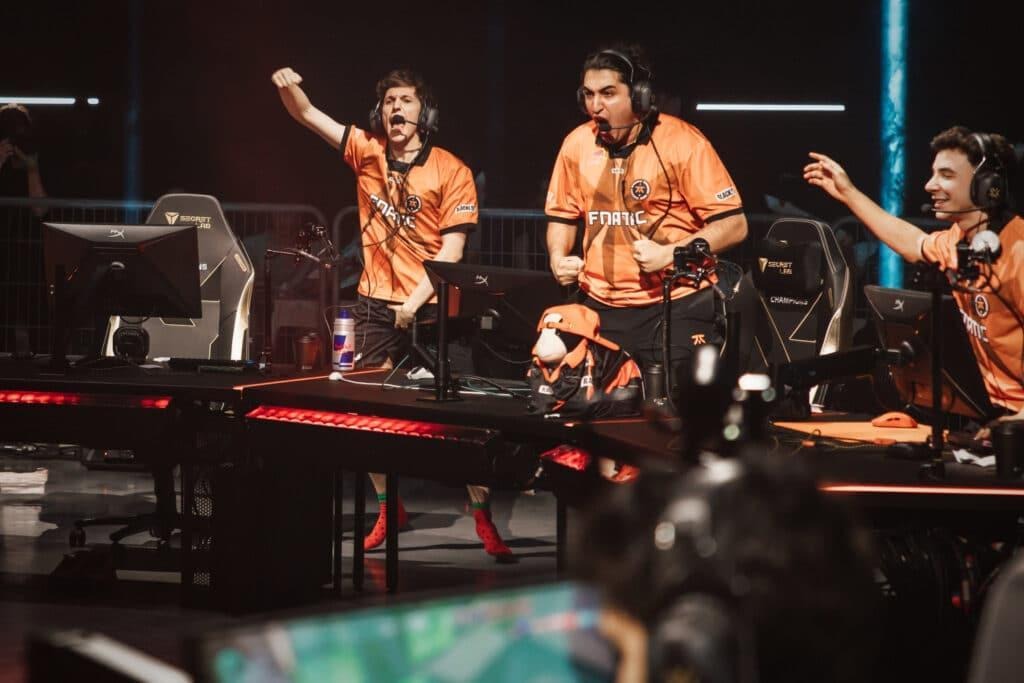
On the pro scene, it becomes very clear who can bounce back quickly. Players like Derke from Fnatic have lost opening rounds plenty of times, yet within seconds, they return to the match with the same precision and control. I often see teams recover from devastating setbacks by quickly regrouping and adapting to the new situation. That ability comes not just from experience but from a deep inner calm that’s difficult to develop without consistent effort and self-discipline.
In my opinion, these moments define a team’s true level. Not the flashy plays, but the silence after failure — how players react when things fall apart. The ability to shut down emotions, move past a mistake, and focus on what’s next is what makes esports more than just competition — it’s a psychological challenge in its own right.
Resilience isn’t always an individual skill. In many cases, a player’s emotional stability is shaped not just by personal experience, but by team support. In esports — especially at major tournaments — the internal atmosphere of the team can become the deciding factor. When mistakes are discussed calmly instead of being met with blame, teams tend to recover from crises much faster.
This is especially noticeable in games like Dota 2 and CS2, where synchronized action is critical. When a squad functions as a single unit, players adapt more quickly and maintain tempo. A great example is OG in Dota 2: even when the scoreboard was against them, the team didn’t fall apart mentally. They kept communicating clearly, supporting each other with both words and gameplay — and that’s what helped them come back into matches, no matter how grim the situation seemed.
This kind of approach builds an internal structure of resilience — an invisible framework that players can rely on in tough moments. It’s much easier to refocus when you know your teammates will help instead of criticize. In my view, this is one of the most overlooked yet essential ingredients of success in competitive gaming.
In modern esports, psychological support has long become a standard. A mental coach or performance psychologist isn’t just a formality — they’re a core part of the training process. Their role goes far beyond understanding psychology; they need to grasp the specific demands of the title the team is competing in. Without this kind of support, many players would struggle to maintain consistent performance throughout the season — especially under the stress of high-stakes tournaments.
This is particularly evident in League of Legends. Top-tier organizations like T1, Gen.G, G2, and JDG all have dedicated professionals working on their players’ mental well-being. These specialists help with recovery after losses, managing fatigue, and preparing for the grueling pace of competitions. Sometimes it’s about breathing techniques or simple routines for relaxation; other times it involves deep, individual work tailored to each player’s emotional triggers. These methods help reduce burnout and keep players sharp over long stretches.
I believe the importance of this role will only grow. The pressure from fans, media, and personal expectations makes esports increasingly vulnerable to psychological strain. What used to be seen as a "soft skill" is now essential — mental resilience is just as critical to preparation as mechanics or tactics.
Mental resilience isn’t just a nice addition to mechanical skill — it’s a core part of being a professional. Players who manage their emotions and maintain clarity under pressure tend to succeed more often. Esports has long outgrown the idea of being “just a game” — it’s a system where the mind, the team, and external support all work together. And on the stage of major tournaments, it’s mental stability that often draws the line between victory and defeat.