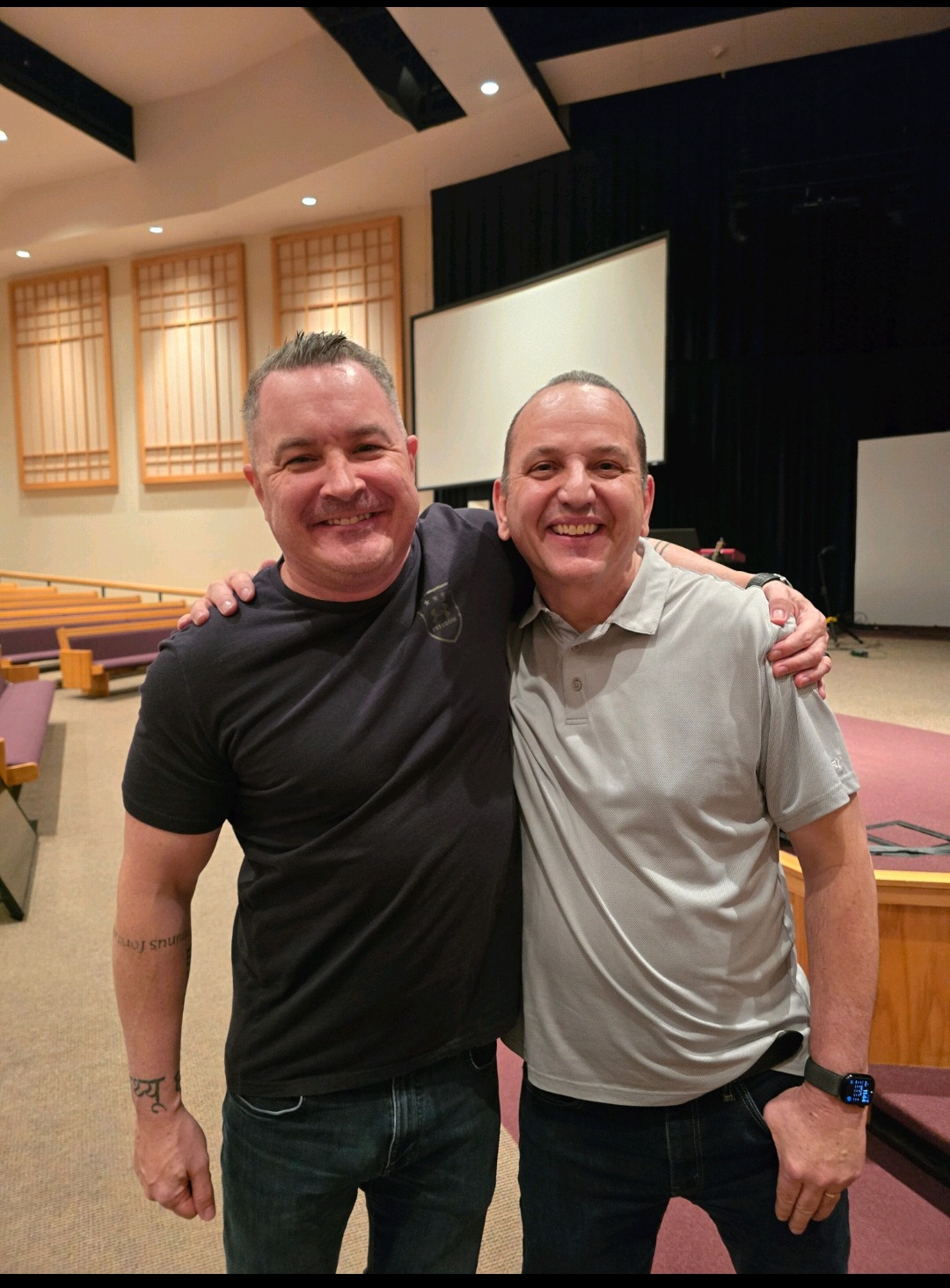
Chris Randle is fully devoted to the norms of leadership, dedication, and flexibility. Chris is a Senior Litigation Attorney and a Lieutenant Colonel in the U.S. Army Reserves, having blended both disciplines while focusing on integrity, judgment, and mentorship. After nearly twenty years in both the civilian and military legal communities, his approach to leadership is based on listening, accountability, and respect for those with whom he works.
Dual Path of Service and Law
For Chris Randle, Kansas marked the beginning of his legal journey, following his graduation with a Bachelor of Arts in History from the University of Kansas in 2000 and a Juris Doctor from the University of Kansas School of Law in 2003. While in law school, he honed his advocacy skills as a member of a national criminal moot court team. These early experiences laid the foundation for a career defined by both analytical precision and a commitment to fairness.
His law career has spanned a range of family, criminal, and civil litigation. Before embarking on his private practice, he worked as a Senior Litigation Attorney at O’Hara and O’Hara in Wichita, Kansas, and at Cordell & Cordell, where he supervised family law cases nationwide.
Earlier, he gained courtroom experience as an Assistant District Attorney in the 18th Judicial District of Kansas, handling felony cases involving property crimes, assault, and drug offenses. His role as a Settlement Consultant at Arcadia Settlements Group further broadened his expertise, allowing him to negotiate complex settlements across the country in workers’ compensation, medical malpractice, and automobile accident cases.
Today, Chris is licensed to practice law in Kansas, Washington, Missouri, and Texas, and is admitted to the Federal District Courts of Kansas and the Western District of Missouri. His diverse practice reflects his belief in being both adaptable and principled—qualities that have served him equally well in his military career.
Leadership in the Military
Alongside his civilian legal practice, Chris Randle has spent almost 20 years in the U.S. Army Reserves and is presently the Staff Judge Advocate for the 2nd Legal Operations Detachment in New Orleans, Louisiana. His duties have included deployment to Baghdad, Iraq, and Djibouti, Africa, as a Battalion Judge Advocate. He has served as the Chief of Operational Law at Fort Hood, Texas, Brigade Judge Advocate for the 259th Military Intelligence Brigade, and as Special Victims’ Counsel, representing service members in sensitive cases.
With a Top Secret/SCI security clearance, Chris's duties have demanded discretion, ethical clarity, and the ability to make decisions under pressure. He has consistently been recognized for his contributions with awards, such as the Defense Meritorious Service Medal, Meritorious Service Medal, and the Army Commendation Medal. Such awards not only capture his professional excellence, but also demonstrate an inherent respect for the people and missions he has been entrusted to lead.
The Foundation of Leadership: Listening and Patience
When asked what strategies have most contributed to his success, Chris emphasizes active listening as his cornerstone. “We are in a day and age when everyone waits to talk,” he says. “Being a listener immediately separates you from the pack.” In both legal practice and military command, listening ensures that decisions are informed, deliberate, and considerate of all perspectives. For Chris, effective decision-making also depends on patience. “Avoiding impulsive decisions,” he notes, “creates a foundation for trust and sound judgment.”
In high-stakes and time-limited environments, leadership so measured is infrequent. Chris's approach reflects his belief that leadership is more about comprehension than management—an ethos he applies to both client advocacy and military mentoring.
Building Trust and Maintaining Professional Relationships
According to Chris, trust is the cornerstone of any lasting professional relationship. “It’s all about trust and time,” he explains. “You have to show a pattern of caring about the mission and the feedback you receive.” This consistency has allowed him to build strong networks within both the legal and military communities.
Chris continues to advance his professional education through ongoing learning, such as attending additional legal education programs and learning a language. To Chris, his development of lifelong learning is not merely a requirement, but is a responsibility; the acknowledgment that both law and the military change at a rapid pace, and effective leaders must also change.
Decision-Making, Delegation, and Accountability
One of the most powerful examples of Chris’s leadership came when a team member under his supervision felt marginalized and undervalued. Rather than dismissing the concern, Chris chose to listen. “I sat him down and explained how valuable he was and how the team didn’t work without him,” he recalls. This simple act of acknowledgment helped restore morale and reinforced the idea that effective leaders invest time in understanding their people.
In Chris’s view, motivation is not driven by fear or authority, but by example. “I try to be a leader they want to follow,” he says, “and be a leader that I would want to follow.” This focus on modeling the behaviors he expects from others—integrity, accountability, and empathy—has earned him the respect of both subordinates and peers.
A Structured Approach to Growth
Chris systematically manages his work and life objectives. He maintains a damm updated weekly task list that remains visible and quantifiable. This discipline reflects a bigger viewpoint he holds: leadership and success are not about the next big spark of creativity, but constant choices made day in and day out. It demonstrates similar diligence that elevated Chris from assistant district attorney to senior litigation attorney, and from commissioned officer to lieutenant colonel.
Defining Leadership in Modern Contexts
In both his legal and military careers, Chris believes leadership is about taking “extreme ownership” of everything within one’s control. “If you are quick to blame others,” he cautions, “then those in your organization know they cannot count on you.” This principle has shaped his approach to every role he has undertaken—whether representing clients in high-stakes litigation or advising military commanders in operational law.
For Chris, leadership is not defined by titles but by actions. It’s about making informed decisions, cultivating trust, and holding oneself accountable to the highest standards. These values are as relevant in the courtroom as they are on the battlefield.
Conclusion
Chris Randle's professional journey exemplifies a career devoted to service, balance, and responsibility. His experience with law and military service shows that real leadership is demonstrated not by authority but by influence, which is earned through integrity, listening, and action. Whether guiding a client through a complicated case or commanding a unit through complex transitions, his experience demonstrates a lasting reality: leadership is not demonstrated through power; it is demonstrated through purpose.