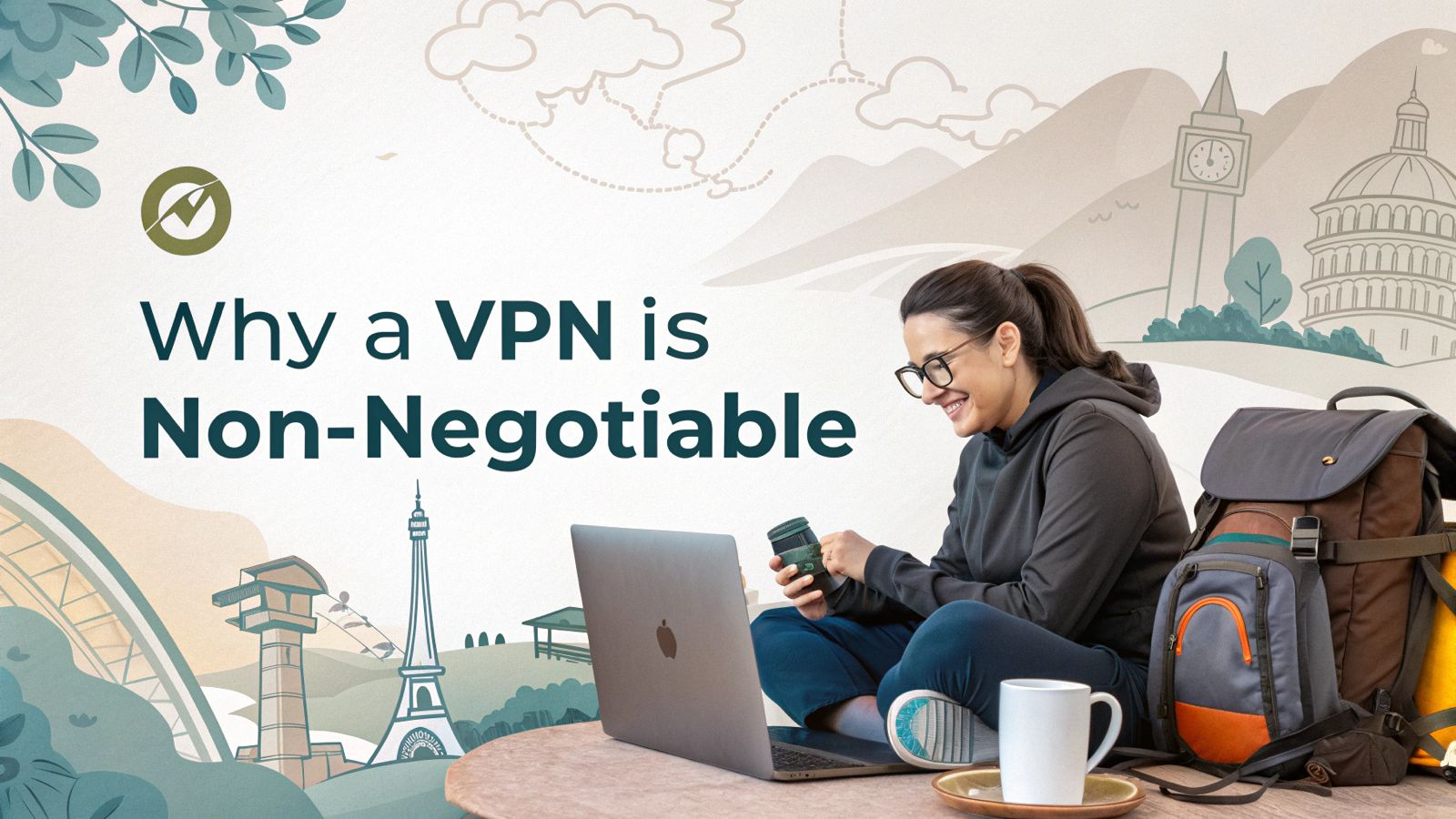
Imagine working from a Parisian cafe one day and a beach hut in Bali the next day. Sounds like a dream, right?
But behind the scenic views and flexible hours, digital nomads face a serious challenge, and that is staying safe online.
Public Wi-Fi, unfamiliar networks, and geo-blocks can quickly turn that dream into a tech nightmare. That’s where a VPN comes in. More than just a buzzword, it’s your first line of defense against cyber threats, data snooping, and content restrictions.
In this article, we’ll break down why using a VPN isn’t optional, it’s a must if you want to stay secure, productive, and truly free while living the remote lifestyle.
Free public Wi-Fi is the remote workers best friend and worst enemy. Airports, hotels, and coffee shops often host unsecured networks that are easy hunting grounds for cybercriminals.
VPNs encrypt your internet traffic and shield it from man-in-the-middle attacks, packet sniffers, and rogue access points. This makes it nearly impossible for hackers to intercept your sensitive information. Instead of putting yourself at a higher online security risk, just use an affordable VPN to stay secured.
Digital nomads or freelancers constantly face geo-blocks. VPNs let you switch virtual locations with a click, granting unrestricted access to your essential services, no matter where you roam. In countries with heavy internet censorship, like China, VPN is often the only way to access Google services, social media, or news outlets. Using a VPN for freelancers or remote workers can help bypass these restrictions and grow your freelancing work.
When you browse the internet, your IP address exposes your location and browsing behavior to websites, trackers, ISPs, and even government surveillance programs. VPNs mask your real IP, routing your connection through a secure server. This helps you stay anonymous and maintain control over your digital footprint. For digital nomads who value privacy, combining a VPN with an antidetect browser can further reduce fingerprint tracking and make online activity significantly harder to trace. In addition to these measures, many remote workers also make use of ProxyCC, a reliable proxy solution that helps diversify IP usage and further minimize digital traces across different online platforms.
Remote teams often rely on region-locked platforms, proprietary dashboards, or company VPNs that only allow access from specific IPs or locations. If you're working for a U.S.-based company while traveling through Southeast Asia, your access might be blocked.
Using a VPN that is specially optimized for freelancers and remote workers, you can easily route your traffic through your home country and connect to your company’s internal systems without any problem.
If you are a freelancer and you manage client contracts, customer data, or sensitive project files, you could be a target for data breaches. A VPN that work best for freelancers ensures your data transfers are encrypted end-to-end, which helps reduce the risk of leaks or unauthorized access.
Many internet service providers throttle bandwidth when they detect high data usage on their users' end. Activities like downloading and uploading large files, video conferencing, or cloud syncing can trigger these slowdowns. A VPN will mask the IP addresses of the websites you visit, which will allow you to avoid speed caps and enjoy consistent performance.
Banks and payment platforms often flag logins from unusual locations, which can freeze your access or trigger security checks. VPNs help you maintain a consistent location for financial platforms, preventing unnecessary lockouts and keeping your access to essential services like PayPal, Stripe, or local banking apps secure.
After a long workday, relaxing with familiar shows can feel like home. But streaming libraries vary by region, and not every country offers access to your favorite content. VPNs let you unlock the full potential of platforms like Netflix, Hulu, or Disney+, no matter where you live.
Public Wi-Fi is everywhere, in cafes, airports, and hostels. But it’s rarely secure. Without a VPN, your internet activity is exposed to everyone on the same network, making it easy for cybercriminals to steal your data through packet sniffing or man-in-the-middle attacks.
Many countries enforce internet restrictions. From social media platforms to essential cloud-based tools, digital nomads often find themselves blocked from the very platforms they rely on the most. Without a VPN to bypass censorship or geo-blocks, accessing tools like Google Drive, Slack, or even Zoom can become impossible in regions with strict online controls.
Banks and digital payment platforms detect unusual login locations and often flag them as suspicious. For nomads constantly changing countries, without a VPN to provide a consistent virtual location, these frustrating interruptions become a regular part of managing finances on the move.
As a freelancer or remote employee, handling sensitive information is part of the job. Without VPN encryption, file transfers, login credentials, and client communications travel through the internet unshielded. This puts both your data and your client’s trust at risk.
Without using a VPN for freelancers, every website you visit and every search you perform is logged and potentially shared. This lack of anonymity can lead to targeted advertising, data profiling, or worse.
VPN prevents ISPs from detecting your activity type, allowing you to avoid throttling and maintain a smoother, faster connection, which is essential for keeping up with clients and deadlines.
Many companies restrict access to internal tools and systems based on IP or region. Without a VPN, you may suddenly lose access to your company’s platform simply because you're in a different country. This not only delays work but may also unintentionally violate security policies.
Not all VPNs are created equal. Pick one that is optimized and special VPN for freelancers and remote workers with servers in the regions you travel to frequently. This ensures you can always find a nearby server for faster speeds or connect through your home country when needed for example, to access local banking or work tools.
Before opening your browser or logging into anything on public networks, launch your VPN first. Public Wi-Fi is the easiest entry point for cyberattacks. A VPN encrypts your data in real-time, making it unreadable to hackers or snoopers on the same network.
Some VPNs offer split tunneling. It's a feature that lets you choose which apps go through the VPN and which don’t. This is handy when you want to stream local content or use services that block VPN traffic, while still protecting your work communications or file transfers.
A kill switch automatically cuts your internet if the VPN connection drops. This prevents accidental data leaks, especially when you're handling sensitive client info or logging into financial platforms. Make sure this feature is enabled in your VPN settings.
Not all VPN protocols offer the same balance of speed and security. WireGuard is known for its speed and efficiency, while OpenVPN is trusted for strong encryption. Avoid outdated protocols like PPTP, which can be easily compromised.
Repeated logins from different IP addresses (countries) can trigger fraud alerts or block your account. Set your VPN to connect through the same country preferably your home location when accessing sensitive or account-locked services.
VPNs can slightly reduce connection speed, depending on the server load and distance. Before making client calls or uploading large files, test your connection using speed test websites by connecting to your VPN. If it's slow, try switching to a server that is closer to your location or less crowded.
Free VPNs often come with serious trade-offs like limited bandwidth, weak encryption, and even data logging. When your livelihood depends on secure, consistent access, it’s worth investing in a premium yet affordable VPN with a strong reputation, clear privacy policies, and 24/7 support.
Most premium VPNs allow multiple simultaneous connections. Make sure all your devices laptop, phone, tablet are protected. Especially when switching between them during work. It's easy to forget to secure your phone while tethering, and that’s an opening you don’t want to leave.
Security patches and performance updates are released frequently. Make sure your VPN app is always up to date across all devices to avoid bugs, vulnerabilities, or compatibility issues with new operating system versions.
The more servers a VPN has across multiple countries, the more flexible and faster your browsing experience will be.
Look for: 50+ countries, including key travel regions in Asia, Europe, and Latin America.
Must-have features:
Security should be airtight but never get in the way of your workflow. A VPN for remote workers should offer:
The VPN you choose must consistently bypass geo-restrictions and unlock regionally locked content.
Choose a VPN known for:
When you’re working across time zones, technical issues don’t wait for business hours. Choose a VPN with:
Some VPNs go above and beyond to serve a remote-first lifestyle. Features to look out for:
In today’s hyper-connected world, being a digital nomad presents endless opportunities but also numerous risks.
From unsecured public Wi-Fi to geo-restricted content and potential data breaches, the dangers are real and often invisible. That’s why a VPN isn’t just a helpful add-on it’s a non-negotiable essential. It shields your data, ensures your privacy, and gives you the freedom to work and explore the world without any limit.
So, before you pack your bags or open your laptop at that sunny beachside cafe, make sure a reliable VPN is part of your toolkit. Because when your lifestyle depends on the internet, your security should never be left vulnerable.
Meta Descriptions:
Why VPNs are essential for digital nomads to protect data, bypass geo-restrictions, and stay secure on any public network while working remotely.