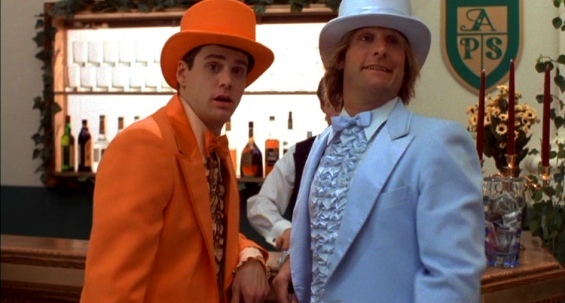
From the moment Harry and Lloyd step out in their unforgettable orange and blue Dumb and Dumber Costume suits, Dumb and Dumber announces itself as a film that revels in absurdity. But beneath its slapstick humour, cringeworthy one-liners, and outlandish misadventures lies a surprisingly rich thematic core. The 1994 cult classic, starring Jim Carrey and Jeff Daniels, may be best known for toilet gags and offbeat road trip shenanigans, but its heart beats with themes of friendship, loyalty, innocence, and a biting satire of societal intelligence standards. Let’s peel back the layers of this slapstick masterpiece to uncover what Dumb and Dumber is really saying.
At the surface, Dumb and Dumber is a comedy about two clueless best friends embarking on a cross-country road trip to return a briefcase to a woman one of them has fallen for. But at its heart, Harry and Lloyd represent a rare purity. While the world around them is selfish, cynical, and cutthroat, these two are honest (albeit incredibly dim-witted) and unwavering in their sense of right and wrong.
Their actions are rarely driven by malice. Lloyd wants to return Mary’s briefcase because he sees it as the right thing to do—not because of the reward. Harry follows him not out of greed, but out of loyalty and friendship. This deep-rooted innocence creates a stark contrast between the protagonists and the so-called “intelligent” people around them, many of whom turn out to be con artists, kidnappers, or liars.
One of the film’s underlying satirical themes is society’s perception of intelligence. Harry and Lloyd are constantly underestimated because of their lack of traditional intellect. They mispronounce words, misunderstand basic concepts, and misread every social cue possible. Yet, in their bumbling way, they manage to survive and often outsmart those who view themselves as more sophisticated.
In one sense, the film suggests that intelligence alone doesn’t equal morality or decency. Many of the smarter characters in the film are deeply flawed, morally corrupt, or entirely selfish. This contrast challenges viewers to reconsider what truly defines someone’s worth or value.
And let’s not forget: despite all odds, Lloyd and Harry complete their journey, navigate a criminal conspiracy, and even reunite Mary with her briefcase—albeit in the dumbest way imaginable. They may be fools, but they’re fools who get things done.
Above all, Dumb and Dumber is a buddy comedy. The theme of friendship is the true emotional core of the film. Harry and Lloyd are practically inseparable—co-dependent, even. They bicker like an old married couple, get into ridiculous fights (who could forget the infamous “most annoying sound in the world” scene?), but they always come back to each other.
In a world filled with betrayal and broken promises, their friendship is rock solid. Even when Lloyd betrays Harry by secretly pursuing Mary, he feels genuine remorse. And Harry, despite being hurt, eventually forgives him. Their dynamic is more than just comedy—it's a sincere portrayal of two people who love each other in their own clueless, dysfunctional way.
This unwavering bond gives the film heart. Viewers may laugh at their idiocy, but they also care about them, root for them, and—even if begrudgingly—respect their loyalty.
The Farrelly Brothers, who directed Dumb and Dumber, crafted a world so absurd that logic has no place in it. This absurdism isn’t just for laughs—it’s a form of escapism. The film allows viewers to let go of realism and bask in pure, unfiltered comedy.
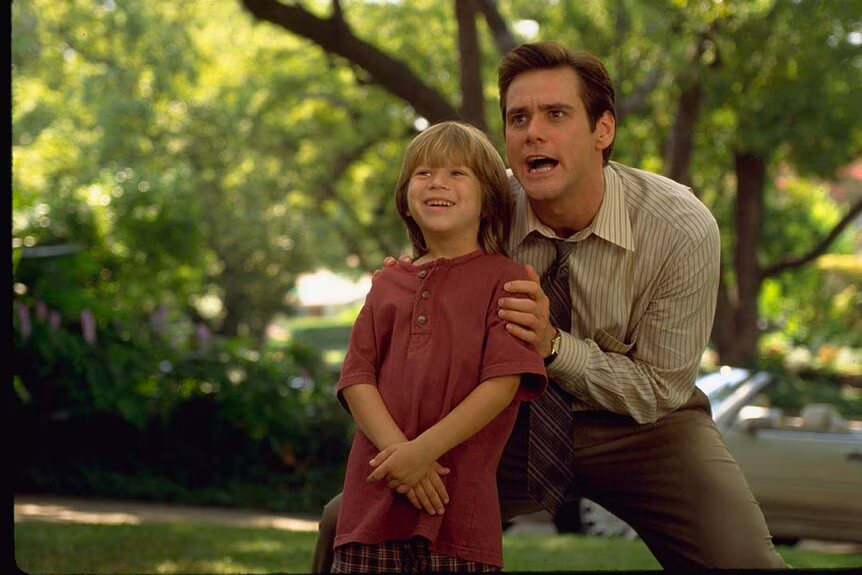
Every scene escalates into something more ridiculous than the last—from feeding a blind kid a dead bird to getting into a heated snowball fight with a woman. Logic is suspended, and chaos reigns. Yet, the characters remain blissfully unaware of how bizarre their world is. This blissful ignorance creates a safe space for the audience to laugh without judgment or consequence.
This escapism is especially relevant in modern times. When the pressures of adult life become too heavy, Dumb and Dumber offers a nostalgic portal into a world where nothing makes sense—but everything is funny.
Subtly woven into the slapstick narrative is a quiet critique of the American Dream. Lloyd dreams of being successful, finding love, and having “a place to call his own.” He genuinely believes that his good intentions and positive thinking will land him a dream life. In his mind, returning Mary’s briefcase is a heroic gesture that will sweep her off her feet.
But reality doesn’t match his fantasy. Mary is married, the reward never comes, and their effort goes largely unnoticed. Instead, they end the movie just as broke and clueless as they started. Their dream of making something out of nothing never materializes—but they’re okay with that.
The ending is ironic and almost tragic in its own way. Yet, it reinforces the film’s central message: success is not measured by wealth, love, or intelligence, but by the ability to laugh, to remain loyal, and to keep moving forward—even if you don’t know where you’re going.
The visual humour in Dumb and Dumber is as iconic as the dialogue. The costume design—particularly the powder blue and blazing orange tuxedos—has become legendary. These bold, clashing suits are not just eye-catching, but they encapsulate the movie’s core themes: total ignorance of social norms and an unflinching belief in one’s choices, no matter how misguided.
This visual audacity highlights just how comfortable Harry and Lloyd are in their own skin. They aren’t trying to impress anyone. In their minds, they’re the height of style and sophistication. And that kind of misplaced confidence is both hysterical and endearing.
More than two decades after its release, Dumb and Dumber remains a staple in pop culture. Fans still quote it, reference it, and even dress like its characters for Halloween or costume parties. Why? Because it's timeless. The themes it explores—loyalty, innocence, and the absurdity of modern life—resonate across generations.
Jim Carrey’s portrayal of Lloyd, especially, remains one of the most memorable comedic performances of all time. Whether he’s grinning like a maniac or delivering the line, “So you’re telling me there’s a chance,” Carrey brings physicality and heart to a character that could have easily been one-dimensional.
Even his wardrobe speaks volumes. The Jim Carrey Cotton Jacket from the road trip scenes is now recognised as a symbol of his laid-back, unpolished charm. It’s a piece of cinematic fashion that feels as relatable as it is ridiculous, just like Lloyd himself.
Dumb and Dumber is not just a comedy. It’s a movie with heart, with purpose, and with themes that sneak up on you amid all the chaos. It challenges what it means to be “smart,” highlights the value of loyalty, and embraces the beauty of being unapologetically yourself—even if you are, well, dumb.
In a world obsessed with perfection, Dumb and Dumber reminds us that sometimes the most lovable people are the ones who know absolutely nothing—but are still willing to risk everything for the people they care about.